REVIEW · ALANYA
From Alanya: Pamukkale and Hierapolis Day Tour with Lunch
Book on GetYourGuide →Operated by TOURMANIA · Bookable on GetYourGuide
White terraces and ancient ruins take a whole day. A Pamukkale and Hierapolis day tour from Alanya hits two top sights in Turkey’s Aegean coast zone—Hierapolis’ massive necropolis and the surreal cotton-castle travertines of Pamukkale. Add a real chance to soak in thermal pools, and you’ve got a trip that feels part history field trip, part spa day.
What I like most is how this itinerary is built around time in the places that matter, not just a quick photo stop. I also appreciate that you get a live guide and a structured visit of the UNESCO site, plus free time to relax and swim. The main thing to consider: Cleopatra’s Antique Pool may be closed for renovations, and that can change what you can do on arrival.
In This Review
- Key highlights you should care about
- The long Alanya-to-Pamukkale haul (and how to plan for it)
- Hierapolis: the Holy City necropolis you actually walk through
- The museum piece (if you stop there)
- Pamukkale travertines: walking the white terraces without ruining the vibe
- Swimming the thermal pools (what’s temperature and how it feels)
- Cleopatra’s Antique Pool: the highlight that can vanish
- Lunch timing and the food reality on a long day
- Tour guides and coordination: what’s worth noticing
- Price vs. what you really pay on the day
- Who this day trip fits best
- Things to pack so the day feels smooth
- Should you book this Pamukkale and Hierapolis tour from Alanya?
- FAQ
- How long is the Pamukkale and Hierapolis day tour from Alanya?
- What’s included in the price?
- What entrance fees are not included?
- Can I swim at Cleopatra’s Antique Pool?
- What should I bring for the day?
- Is the tour guide available in English?
Key highlights you should care about
- UNESCO combo day: Hierapolis necropolis plus Pamukkale thermal travertines in one trip
- Thermal pools you can swim in: water ranges from about 30°C up to hotter springs
- Pamukkale’s real meaning: Pamukkale is literally the cotton-castle look of the white terraces
- Hierapolis theatre and ruins: Roman and Greek remains in the Holy City area
- Cleopatra Pool may be off-limits: temporary closure has shown up on this tour
- Tour-managed pacing: hotel pickup, guided segments, and lunch built in
The long Alanya-to-Pamukkale haul (and how to plan for it)
This is not a quick hop. Alanya to Pamukkale is roughly 380 km / 236 mi, and the drive time is a big part of the experience. The tour runs as a full-day outing—listed at about 15 hours—and the “you’re up early” feeling is real even before you see the white terraces.
Here’s the practical tip: treat it like a bus day with two prize stops. That means you’ll want a comfortable outfit for sitting, and swim gear ready to go in your bag so you’re not rummaging around later. Also keep your expectations flexible: one group reported the tour lasting closer to 21 hours, so build in patience.
If you get motion-sick, take precautions before you leave. The itinerary structure has long van stretches, and you’ll be sitting for hours before lunch and again after Pamukkale.
Other Pamukkale day trips from Alanya



Hierapolis: the Holy City necropolis you actually walk through
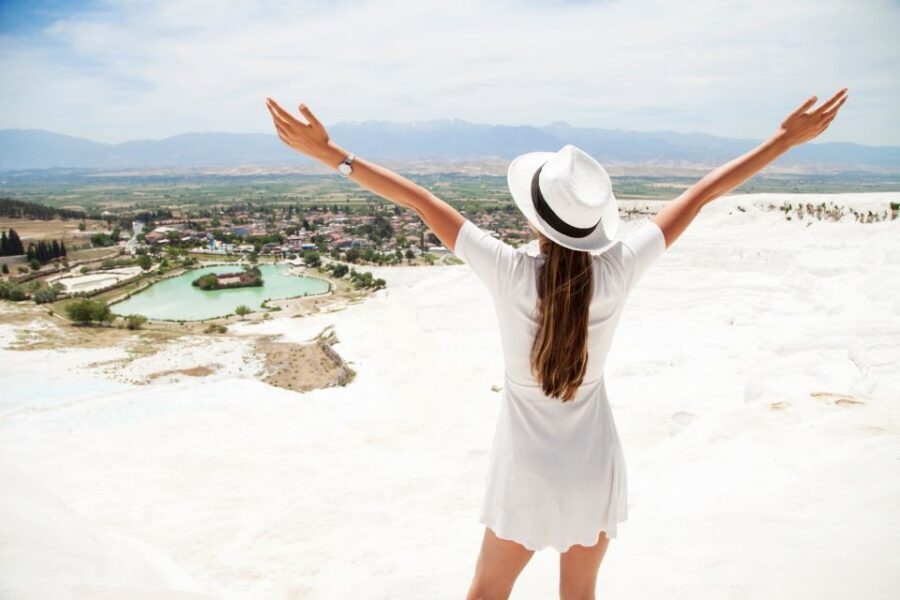
After pickup, the day turns into ancient-world mode with a guided visit to Hierapolis, the UNESCO site’s history anchor. Hierapolis means Holy City, and the ruins sit right next to the hot springs area—so you get the sense that people built their lives around this water long before modern tourism existed.
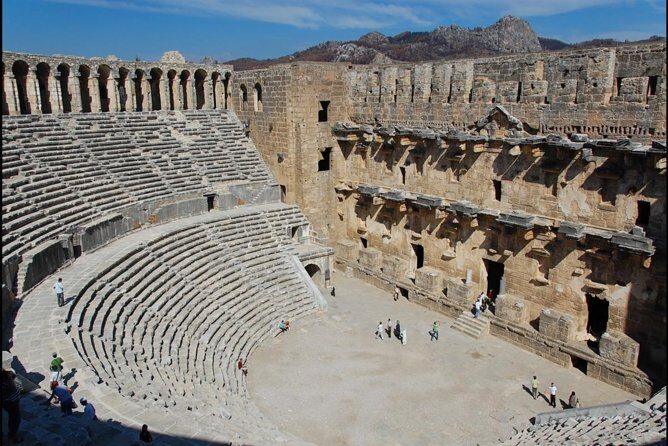
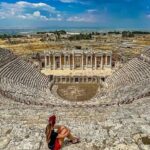
I love that Hierapolis isn’t just one ruined wall. The area includes a wide spread of sites along main streets, and the famous ancient theatre is part of what you’ll likely see on your route. Hierapolis was an important Greco-Roman city, and the history here is tightly tied to the springs.
You also get a sense of why Hierapolis became a major destination even for people who weren’t bathing. It had extensive burial grounds—described as Anatolia’s largest necropolis—so much of what you’ll experience is about how the Romans and Greeks handled death, worship, and public space.
If you’re the type who likes details, this place rewards attention. It was associated with Pergamon rulers in the 2nd century BC and later became part of the Roman province of Asia after shifting political control. You’ll feel that layers effect when you look at the mix of Greek and Roman structures and the way the ruins are arranged.
The museum piece (if you stop there)
This tour can include time at the Hierapolis museum area, where artifacts tie to other ancient cities in the region. The museum setup includes areas linked to the Hierapolis baths and other open sections thought to connect to gymnasium and library use. Even if you don’t do museum deep-reading, it’s a good context builder so the ruins don’t just feel like piles of stone.
Pamukkale travertines: walking the white terraces without ruining the vibe
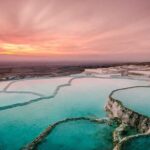
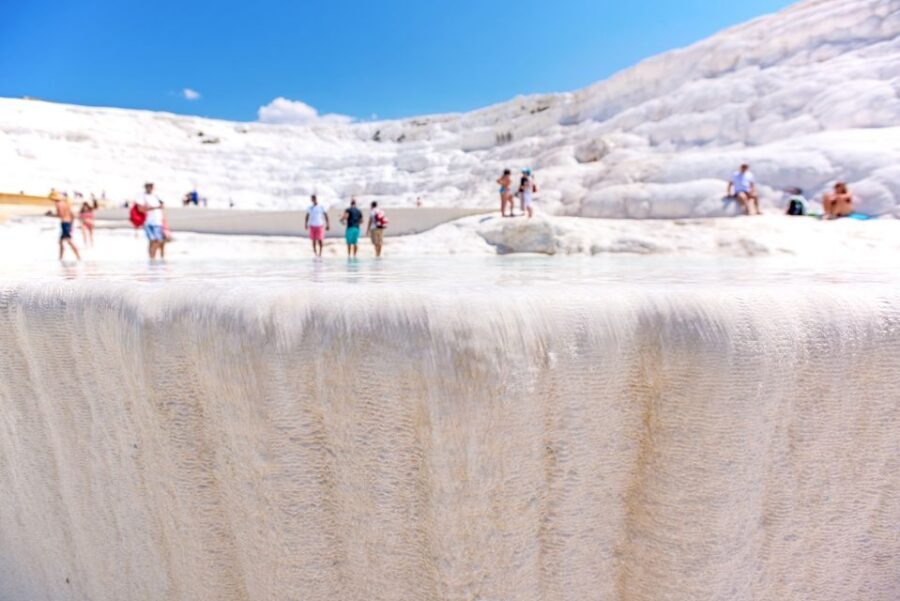
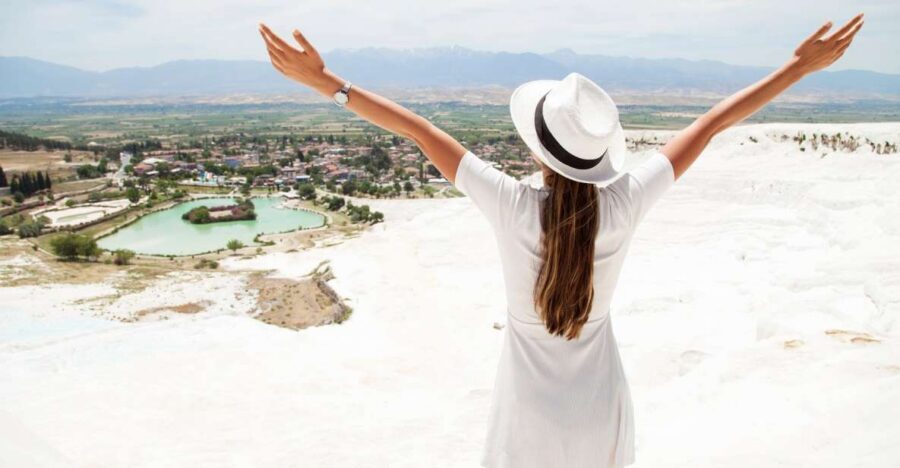
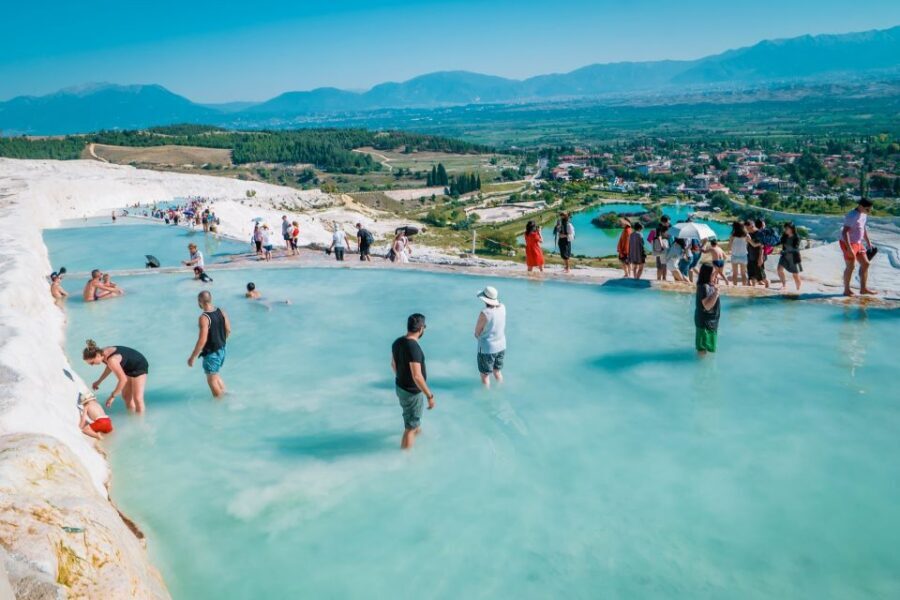
Then comes Pamukkale’s big visual hit: snow-white calcium terraces formed by mineral-rich thermal water. This is the “cotton castle” look—Pamukkale literally meaning that—because the surface resembles drifting cotton clouds. It’s one of those sights that doesn’t feel real until you’re standing near it.
What you’ll do here is simple but worth doing right: you’ll have time to walk in the travertine terraces and see how the water has shaped the calcium formations. The tour guide helps translate what you’re looking at, which makes a big difference. Without that, you can still enjoy the views, but you miss the why.
Pamukkale is also one of the world’s older thermal towns, and the site is UNESCO-listed, which means it gets heavy foot traffic. That’s also why timing matters. You’ll likely want to slow down, look carefully, and take photos at the angles where the white terraces look most sculpted.
Swimming the thermal pools (what’s temperature and how it feels)
Swimming is one of the core reasons people book this day trip. The waters around Pamukkale’s pools are generally described around 30°C, and the springs cover a huge temperature range—about 30°C up to near 100°C across 17 hot springs. You won’t boil yourself in a puddle; you’ll be choosing a pool that matches your comfort level.
There are also small thermal pools, and which ones are accessible can depend on weather and site conditions. Bring swimwear and be ready to move from terrace time into water time when your schedule allows.
Practical advice: plan for slippery ground, go slow, and keep your towel accessible. If you bring water shoes, you might feel more comfortable stepping around wet stone.
A few more Alanya tours and experiences worth a look



Cleopatra’s Antique Pool: the highlight that can vanish
Cleopatra’s Antique Pool is often marketed as a must-do. The story is part myth, part geology: it’s described as an artificial pool built over ancient columns that fell during earthquakes. It wasn’t actually owned by Cleopatra, but visitors can swim among those ruins-like remains in the same spot.
Here’s the catch you should take seriously: the tour information and at least one booking experience both point to a temporary closure for renovations. In plain terms, you may arrive hoping to do the Cleopatra pool moment—and find you can’t access the pool area at that time.
So what should you do? Don’t build your whole mental payoff around Cleopatra’s pool. Treat it as a possible bonus, not the center of the day. You’ll still get Hierapolis and Pamukkale terraces, and the thermal swimming at other pools can still deliver the main Pamukkale feeling.
If Cleopatra’s pool is closed when you go, that’s when attitude matters. The white terraces and regular hot springs can still be the emotional high point, especially if you lean into the bathing and the walking instead of waiting for one specific photo.
Lunch timing and the food reality on a long day
Lunch is included, but that doesn’t mean it’s a relaxed lunch. This kind of tour runs on schedules, so you’ll likely face buffet-style meal service. One experience notes the meal period felt short compared to shopping time, which is a useful warning if you like a long sit-down.
Food quality is one of those “varies by day” things, but there are clear patterns in what’s said. One positive note praised vegetarian options at breakfast and lunch, while others described it simply as buffet with limited excitement. You’ll want to eat what you can quickly and get your energy back for the next walking-and-soaking segment.
Bring a snack mindset too. If drinks aren’t included (they aren’t), it’s smart to pace yourself with water during the day. Expect drinks to cost extra at stops.
Tour guides and coordination: what’s worth noticing
This is a live guided tour with English support. That matters because Hierapolis and Pamukkale can feel like separate attractions until someone connects them.
The best guided experiences are the ones where the guide can clearly explain what you’re seeing in the language you understand. One review specifically praised a guide named Vadim for giving proper information in both EN/RU, and another mentioned Valdi as friendly and multilingual.
If English matters to you, this is also where you should be alert. One experience said the guide used English less than Russian during the commentary. That doesn’t mean English disappears, but it’s a reminder that multi-language tours can still skew depending on your group and guide style.
On the transportation side, reviews described the driver as coordinated and safe, with well-managed transfers between stops. That’s important on a day where you’ll be sitting for hours.
Price vs. what you really pay on the day
At $71 per person, this tour is priced for a full, structured day from Alanya with hotel pickup/drop-off, a tour guide, and lunch. That’s not bad value when you consider the distance and the fact that you’re not navigating on your own.
But you should know the extra costs that can add up:
- Entrance fee for Pamukkale and Hierapolis: €30 (not included)
- Drinks: not included
So your true budget is $71 plus roughly that entrance fee, and whatever you spend on bottled drinks and any shopping stops. If Cleopatra’s pool is closed, it can also affect how much you feel you got for your money—because that pool is one of the most famous add-ons people expect.
Still, if you want the “see the big two in one day” efficiency, this can be a cost-effective way to do it compared with coordinating everything yourself.
Who this day trip fits best
This trip suits you if you:
- Want both Hierapolis and Pamukkale without planning a two-day sequence
- Like guided context for ruins and UNESCO sites
- Are okay with a long travel day and staying focused on two main “set pieces”
- Want real time for thermal water, not just a glance
It might not be your best match if you:
- Are strongly focused on Cleopatra’s Antique Pool and would feel disappointed if access is closed
- Hate rushed meals or lots of waiting around between segments
- Need a highly flexible itinerary (this tour is structured, and the schedule is the schedule)
Things to pack so the day feels smooth
You’re going to walk, you’re going to be wet, and you’re going to sit. Pack for that rhythm:
- Comfortable shoes (terraces and wet stone can be slippery)
- Swimwear
- Towel
- Camera
Also, consider sunscreen and a hat for the terraces, since Pamukkale’s bright white setting can be sun-intense.
Should you book this Pamukkale and Hierapolis tour from Alanya?
I’d book it if you want a guided, one-day “big hits” route with UNESCO ruins plus Pamukkale’s travertines, and you’re excited about thermal pool time. The included lunch and hotel pickup/drop-off make it easier than DIY, and a good guide turns the ruins from random to meaningful.
I’d pause or go in with extra realistic expectations if Cleopatra’s pool is the top reason you’re booking. Since access can be closed for renovations, you should treat it as a bonus rather than a guarantee.
If you can handle a long ride and want that one-day efficiency, this tour is a solid way to experience Pamukkale and Hierapolis together.
FAQ
How long is the Pamukkale and Hierapolis day tour from Alanya?
The tour duration is listed as 15 hours, with pickup from Alanya and driving time to the Pamukkale area included.
What’s included in the price?
The tour includes hotel pickup and drop-off, lunch, and a tour guide.
What entrance fees are not included?
You’ll need to pay an entrance fee for Pamukkale and Hierapolis of €30, since it is not included in the tour price.
Can I swim at Cleopatra’s Antique Pool?
Cleopatra’s Antique Pool can be temporarily closed for renovations, and access to the pool area may not be available.
What should I bring for the day?
Bring comfortable shoes, swimwear, a towel, and a camera.
Is the tour guide available in English?
Yes, the tour guide is listed as available in English.